Coffee Collective

2025-26

Renew, restore, refresh, regenerate,
reinvigorate revaluate.

Maximising the value of spent coffee grounds while minimising environmental impact

The problem

The disposal of spent coffee grounds (SCG) into municipal landfills poses a significant environmental challenge. Globally, millions of tonnes of SCG are generated each year, with the majority ending up in landfill. When SCG decompose anaerobically in these settings, they produce methane—a greenhouse gas far more potent than carbon dioxide. This not only contributes to climate change but also represents a missed opportunity to recover value from a resource that carries a high ecological cost from its production and transport. Additionally, the lack of practical, community-based solutions for SCG disposal means that local food systems and soil health do not benefit from this potential organic input, and public awareness of circular economy principles remains limited.

Our solution

The Coffee Collective project addressed this issue by creating a local, circular system for collecting, treating, and redistributing spent coffee grounds. Partnering with local coffee suppliers, community gardens, and academic institutions, the project diverted 3.2 tonnes of SCG from landfill. The grounds were either composted or dried and applied directly to soil, after appropriate treatment to ensure safety and effectiveness. This approach avoided 1.9 tonnes of CO₂e emissions while supporting soil health, local food production, and community education.

By integrating SCG redistribution into existing delivery routes and acting as a collaborative intermediary, the project demonstrated a scalable, evidence-based model for sustainable waste management that delivers both environmental and social benefits.

Aerial view of community garden beds
1900kgCO₂e

Avoided emissions

3.2T

Spent coffee diverted from landfill

3.2T

Spent coffee diverted from landfill

Key objectives for Coffee Collective

A core objective of the project was to quantify the environmental impact of sending SCG to landfill while assessing the potential carbon emission savings achieved by diverting them to composting or reuse.

By exploring the difference in emissions between disposal routes, the project sought to build a clearer evidence base for why organic waste like coffee grounds should be kept out of landfill wherever possible.

Alongside this, the project aimed to assess the viability of SCG as a soil improver or fertiliser-like input for community growing spaces. Through redistribution and drying of the grounds, the project explored their potential to enhance soil quality and support local food growing.

Through working with local community groups, the project also looked to increase awareness of circular economy principles. By demonstrating a practical, local example of how waste materials can be kept in circulation, it highlighted clearly the potential community benefits of sustainable waste management.

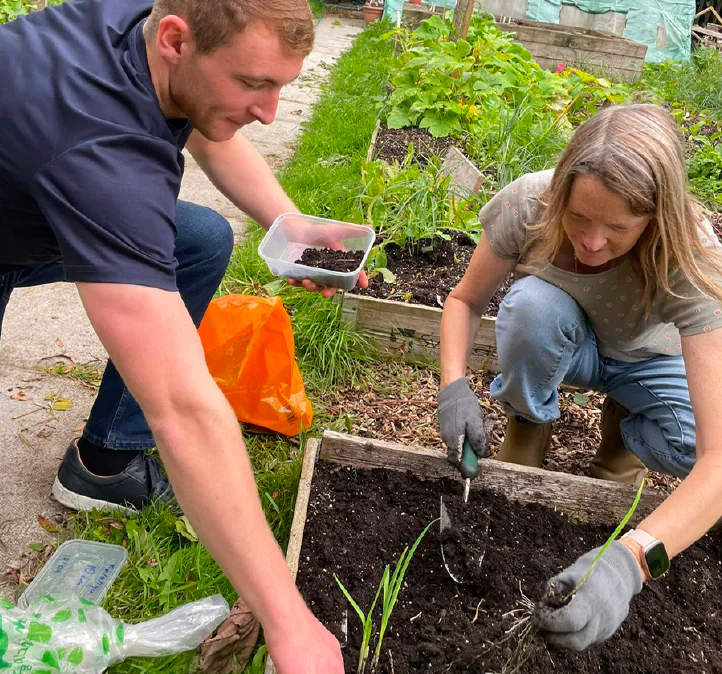
People tending a community garden

The methodology behind
the case study

The process for handling the SCG was designed to be simple, efficient, and low in environmental impact. Grounds were collected by Bean Coffee Roasters during their regular delivery runs and returned to the roastery.

  1. SCG

    Dried in ovens to be used later as a fertiliser-like soil improver.

  2. SCG decontaminated

    Treated, then distributed directly by Carbon Happy World to community gardens across the Liverpool City Region.

This streamlined process ensured that the majority of the coffee grounds were kept in use, minimising waste and maximising their value for local growing projects.

Once delivered to community gardens, the wet coffee was incorporated into existing compost systems, at varying ratios to determine the best mix and impact value.

Dried coffee grounds were also delivered to community gardens to be directly applied to soil. However, before this, soil samples were taken at the sites. This baseline sampling allows for future testing of the soil to assess the impact of the SCG, although that analysis has not yet been carried out.

Meeting Tom through The Coffee Collective project has been brilliant for our community garden. Using these coffee grounds for our compost really fits into our ethos of zero waste. By doing this, not only are we preventing the coffee from going to landfill (where it would decompose anaerobically, producing methane), but we are also making sure that the nutrient-rich coffee doesn’t go to waste.

The process has been really smooth. Tom is always great at communicating when the delivery will be and would answer any questions we had. He even did a talk to young adults from The King’s Trust who were volunteering at our gardens.

Thanks to Tom and Carbon Happy World, we have increased our nutrient-rich compost and also increased our knowledge. We are really looking forward to more deliveries. Thank you

Dawn Mcshane, who runs Karonga Gardens

Coffee Collective case study conclusion

The Coffee Collective project proved that simple, community-driven action can deliver real environmental and social impact.

By collecting and redistributing 3.2 tonnes of spent coffee grounds from local cafes, the project prevented 1.9 tonnes of CO₂e emissions that would have resulted from landfill disposal. Most of the grounds were composted or safely treated and applied to community gardens, supporting local food production and soil health.

Beyond the carbon savings, the initiative built strong partnerships between coffee suppliers, community groups, and academic researchers. It raised awareness of circular economy principles and empowered volunteers with practical skills in sustainable waste management. The Coffee Collective stands as a scalable model for turning waste into a resource—demonstrating that local climate action can reduce emissions, strengthen communities, and inspire broader change.

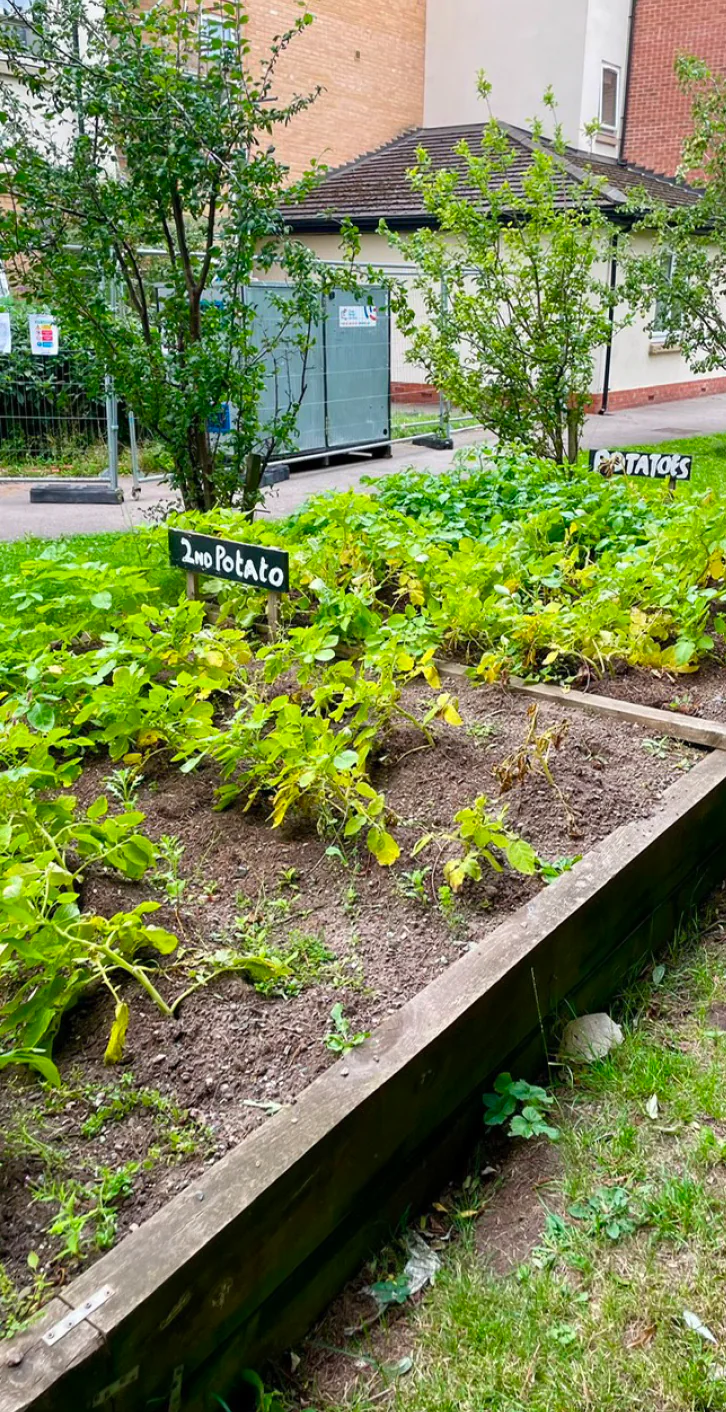
Community garden growing beds

Leave your details and
we’ll be right with you.

Have questions or ideas about how we could enhance your business? We’d love to hear from you. Reach out anytime and let’s connect.

Find a time to talk

Choose the conversation that suits you. Available dates and times appear as soon as the calendar opens.

The calendar opens here on our website. Opening it connects to Cal.com, which may use its own cookies and technologies. Read our privacy notice.

Send us your details

Tell us how to reach you, and we’ll be in touch.

We use your details to respond to your request. Read our privacy notice.

Back to call options